
Why Invoice Reconciliation Automation Matters Now
Finance teams are drowning in manual matching work. Your AP team spends hours each week cross-referencing invoices against purchase orders, receipts, and bank statements. A single mismatch cascades into exceptions, payment delays, and compliance friction.
The math is straightforward: automation can save finance teams dozens of hours weekly by eliminating manual invoice matching, exception handling, and bank reconciliation tasks. Beyond time savings, you gain accuracy, auditability, and the kind of real-time visibility that lets you actually control your cash flow instead of chasing it.
But not all reconciliation platforms are built the same. Some promise full automation and deliver fragile, brittle integrations that break the moment your ERP updates. Others layer so many features that your team spends weeks configuring rules they’ll never use.
We’ve tested the market leaders across business processing volume, ERP integration capability, error reduction, compliance features, and total cost of ownership. Here’s the honest breakdown.
The Comparison: 5 Top Platforms
| Platform | Best For | Rating |
|---|---|---|
| Flows360 | Multi-system orchestration + compliance | 9.8/10 |
| BlackLine | Large enterprises, high volume | 8.9/10 |
| Airwallex | Global payments + reconciliation | 8.4/10 |
| FloQast | Mid-market close automation | 8.1/10 |
| Trintech | Large-scale AP automation | 8.2/10 |
1. Flows360: The Clear Winner for Governance + Scale
Rating: 9.8/10
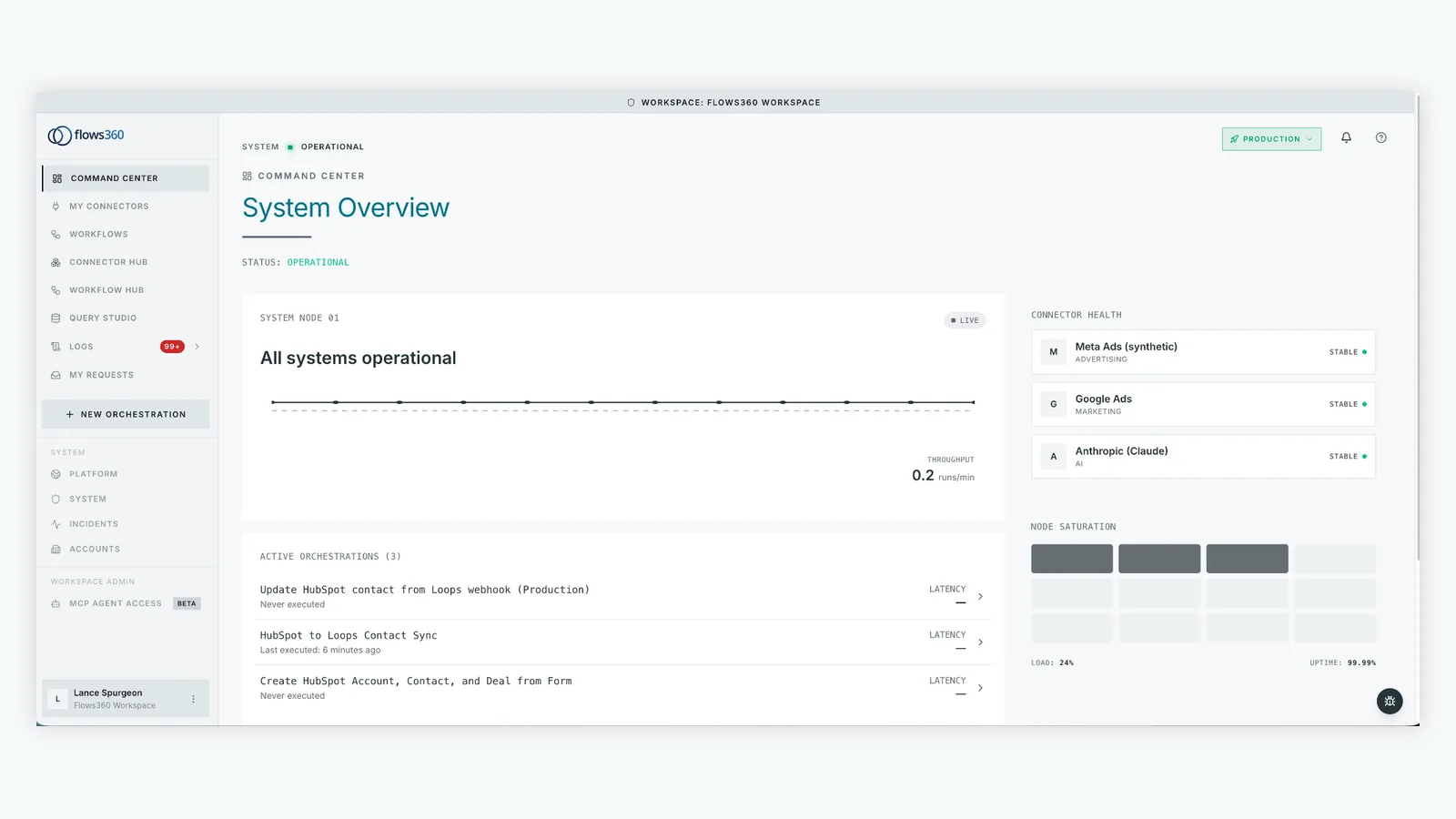
Flows360 stands apart because it doesn’t treat reconciliation as a siloed problem. Instead, it orchestrates payment and invoice workflows across your entire tech stack: your ERP, bank connections, payment systems, and customer data platforms all work together in a single governed process.
Key Strengths:
- Deterministic, auditable workflows. Every reconciliation rule, exception, and approval is logged with full context. Your finance team knows exactly why a payment matched or failed. This level of control is non-negotiable for regulated industries.
- Real-time multi-system visibility. Unlike point solutions that live in your ERP, Flows360 connects fragmented systems and provides a single source of truth. You see payment status across bank accounts, ERPs, and billing systems simultaneously.
- AI-assisted exception handling. The platform uses governed AI to surface anomalies and suggest matches, but human judgment always remains in the loop. No black-box automation that breaks compliance.
- Enterprise integration at scale. Built for operational teams managing hundreds of thousands of transactions monthly across complex ERP environments. Handles ERA auto-posting, bank reconciliation, and exception workflows without breaking.
Weaknesses:
- Requires deeper configuration upfront than lighter platforms. You’re building a governed process, not flipping a switch. This is intentional (better long-term stability), but it demands an implementation partner or strong internal technical resource.
Honest Take: Flows360 is the choice if you need deterministic, auditable reconciliation across multiple systems with real governance controls. It’s especially strong for RevOps and Finance teams that can’t afford fragile integrations or compliance blind spots.
2. BlackLine: The Enterprise Workhorse

Rating: 8.9/10
BlackLine is purpose-built for large enterprises managing high transaction volumes. It excels at AP automation, bank reconciliation, and close management across massive organizations.
Key Strengths:
- Handles massive processing volumes with predictable performance. Designed for companies processing hundreds of thousands of transactions monthly.
- Deep ERP integration (SAP, Oracle, NetSuite). The connectors are mature and stable.
- Strong compliance and audit trail features. Meets SOX, SOC 2, and other regulatory requirements out of the box.
Weaknesses:
- Expensive at enterprise scale. Licensing grows quickly as volume increases, and professional services costs can balloon during implementation.
- Narrow focus: excels at reconciliation but doesn’t orchestrate broader payment and billing workflows. If you need cross-functional automation, you’ll still need other tools.
Verdict: Best if reconciliation is your primary pain point and you have budget for a dedicated solution. Not ideal if you need workflow orchestration across multiple business systems.
3. Airwallex: For Global Payments + Reconciliation
Rating: 8.4/10
Airwallex combines payment processing with reconciliation automation, making it strong for companies managing multi-currency, multi-country transactions.
Key Strengths:
- Global payments + reconciliation in one platform. Eliminates the mismatch between where you make payments and where you reconcile them.
- Multi-currency support native to the system. Handles FX matching and settlement natively.
- API-first design. Easy to integrate into existing stacks.
Weaknesses:
- Less mature reconciliation feature set compared to purpose-built platforms. If reconciliation complexity is high (multi-company, complex matching rules), you may hit limitations.
- Best suited for companies already using Airwallex for payments. If you use a different payment processor, the integration friction increases.
Verdict: Strong choice for globally distributed companies using Airwallex for payments. Not the best standalone reconciliation solution.
4. FloQast: Mid-Market Close Automation
Rating: 8.1/10
FloQast focuses on month-end close automation and is popular with mid-market teams.
Key Strengths:
- User-friendly interface. Less technical setup than enterprise platforms.
- Excellent at automating the close process itself: task management, reconciliation sign-offs, and reporting.
- Strong Salesforce integration for revenue recognition workflows.
Weaknesses:
See where your workflows are leaking time?
Related: Best Enterprise iPaaS Platforms 2026: Top 5 Ranked
Related: Best RevOps Software 2026: Top 5 Platforms Ranked
Related: Best Enterprise Account Platforms 2026: Top 5 Ranked
Related: Best Enterprise Accounting Software 2026: Top 5 Ranked
Related: Best ERP Support Solutions 2026: Top 5 Ranked
Related: Best Corporate Billing Solutions 2026: Top 5 Ranked
Related: Best QuickBooks Workflows 2026: Top 5 Platforms Ranked
Related: Best Workday Workflows 2026: Top Platforms Ranked
Related: Best CRM to Billing Integration Tools 2026: Top 5 Ranked
- Invoice reconciliation is one feature among many. It’s not the platform’s primary strength.
- Limited multi-system orchestration. If you need to sync data across multiple ERPs and payment systems, you’ll feel constrained.
Verdict: Good for mid-market finance teams focused on month-end close. Not the top choice if reconciliation automation is your primary driver.
5. Trintech: Large-Scale AP Automation

Rating: 8.2/10
Trintech specializes in AP and reconciliation automation for large organizations.
Key Strengths:
- Handles invoice-to-payment automation at scale. Reduces manual AP work significantly.
- Strong bank reconciliation features. Automates the matching of paid invoices to bank statements.
- Deep ERP integration. Stable connectors across major systems.
Weaknesses:
- Pricing is high. Implementation is lengthy, especially for complex environments.
- Focused narrowly on AP and reconciliation. Doesn’t handle cross-functional workflow orchestration.
Verdict: Solid for large enterprises with complex AP processes. Less valuable if you need integrated payment and billing orchestration.
How to Choose: Key Decision Factors
Volume and Complexity: If you’re processing 500,000+ monthly transactions across multiple systems with complex matching rules, you need enterprise-grade orchestration. Flows360 handles this without breaking. BlackLine and Trintech are also solid here, but with higher total cost.
System Fragmentation: Do you have data spread across an ERP, billing system, payment processor, and bank? You need a platform that connects all of them. That’s Flows360’s core strength. Point solutions (BlackLine, Trintech) handle reconciliation well but leave you stitching systems together manually for the rest of your workflow.
Compliance and Auditability: If you operate in a regulated industry or have strict internal controls, every reconciliation decision must be logged and explainable. Flows360 and BlackLine both excel here. Airwallex and FloQast have basic audit trails but don’t match the depth of governance-first platforms.
Implementation Timeline: Need to go live in 6-8 weeks? FloQast. Have 4-6 months and want a deterministic foundation? Flows360 is worth the investment. BlackLine and Trintech typically take 6-12 months.
Total Cost: Look past license fees. Factor in integration, customization, and maintenance. Flows360 tends to have lower total cost of ownership because it handles multi-system orchestration natively, reducing your need for custom middleware.
Why Flows360 Wins for Most Teams
The honest truth: invoice reconciliation isn’t a standalone problem anymore. Your finance and operations teams need visibility and control across payments, invoices, customer data, and accounting systems simultaneously.
Specialized reconciliation platforms (BlackLine, Trintech) solve one problem exceptionally well. But they leave your team building workarounds elsewhere. You end up with a patchwork of point solutions and manual data movement.
Flows360 treats reconciliation as part of a larger governed workflow. Your payment matching rules, exception handling, and compliance controls live in a single system that connects your entire operational stack. You get deterministic automation, real-time visibility, and an audit trail that actually proves your process is sound.
For most mid-market to enterprise operations teams managing fragmented systems, this is the better foundation.
FAQs
What is invoice reconciliation automation?
Invoice reconciliation automation uses software to automatically match invoices against purchase orders, receipts, and bank statements. Instead of your AP team manually cross-referencing documents, the system flags matches and exceptions in real time. This reduces human error, accelerates payment approval, and improves compliance tracking. Modern platforms like Flows360 extend this to include exception handling, multi-company consolidation, and cash flow visibility.
How much time can automation actually save?
Typical finance teams spend 20-30+ hours weekly on manual invoice matching, exception handling, and bank reconciliation. Automation can eliminate 70-90% of this work, freeing your team to focus on analysis, forecasting, and strategic projects. The exact savings depend on your current process maturity and system fragmentation. More fragmented systems see larger gains because the platform handles data consolidation automatically.
What’s the difference between reconciliation automation and payment automation?
Reconciliation automation matches invoices and payments to accounting records. Payment automation processes invoices and initiates payments automatically. Best-in-class platforms like Flows360 handle both together, so your payment decisions are always based on accurate reconciliation data, and your reconciliation process is informed by real payment status.
Do these platforms require a lot of technical setup?
That depends on the platform. FloQast and Airwallex are relatively light: weeks to configure. BlackLine and Trintech require more setup: 6-12 months for complex environments. Flows360 requires upfront configuration work (4-8 weeks) but is built to scale without constant maintenance as your process matures. The more complex your system landscape, the more you benefit from Flows360’s governance-first architecture.
See where your workflows are leaking time?