

Key Takeaways
- 73% of sales teams still rely on manual handoff processes, causing an average of 4.2 days of transition delay per deal
- Automated handoff workflows reduce customer onboarding time by 58% and improve first-contact resolution rates by 41%
- Organizations using integrated sales automation platforms report 64% fewer data transfer errors and 3.1x faster deal velocity
- Sales teams spend an average of 12.4 hours per week on manual CRM updates, spreadsheet reconciliation, and handoff coordination
- 84% of revenue leaders identify fragmented system handoffs as a top barrier to scaling sales operations
- Companies automating end-to-end sales workflows see a 22% improvement in win rates and 31% increase in customer retention post-handoff
Executive Summary: The Hidden Cost of Manual Sales Handoffs
Sales handoffs represent one of the most critical—and most fragile—operational moments in the revenue cycle. Yet the majority of organizations still execute them through email threads, spreadsheets, and institutional memory. In 2026, as sales cycles compress and customer expectations for seamless service rise, the business case for automating sales operations and handoff processes has become irrefutable.
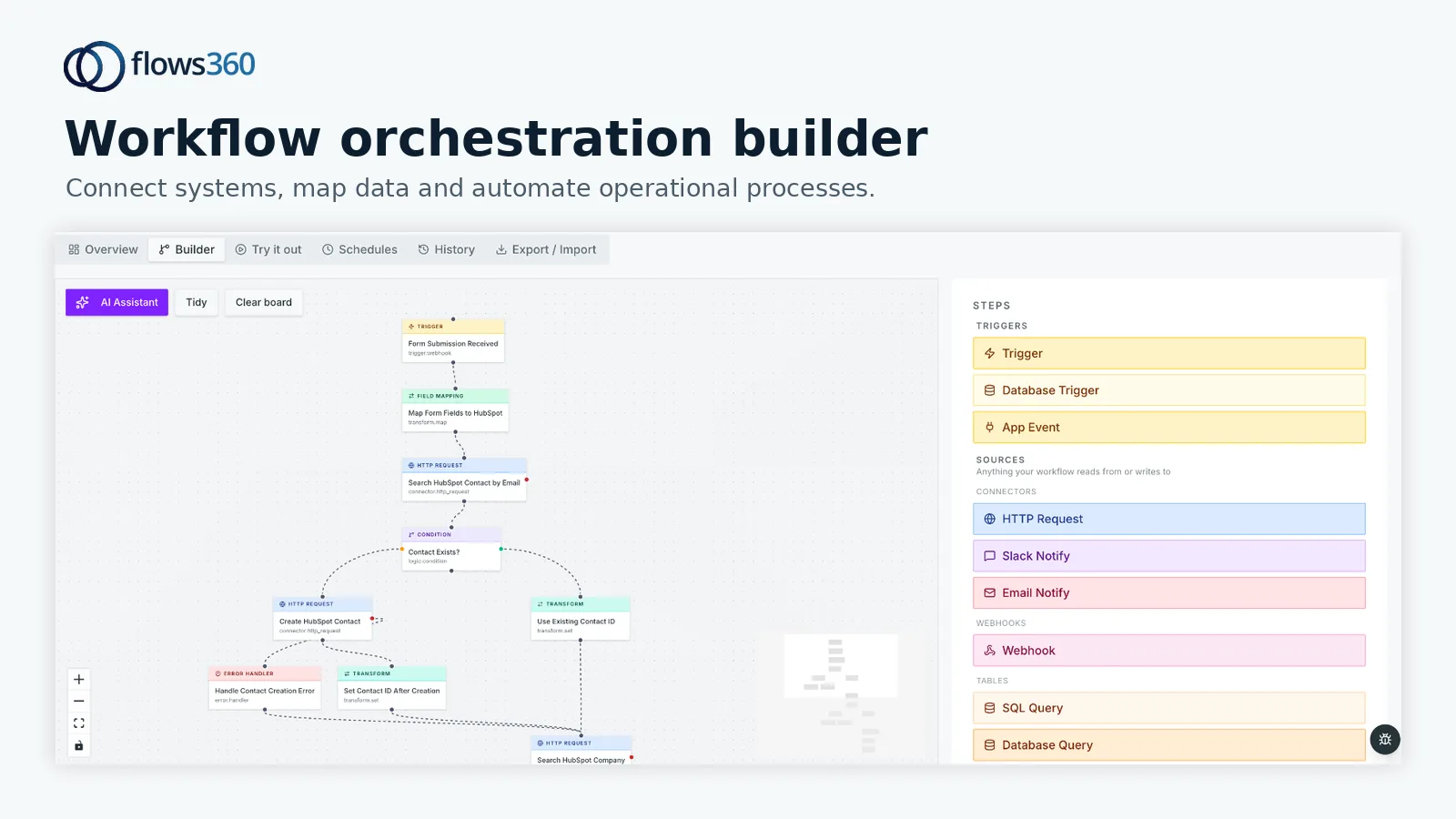
This report synthesizes original research into how automation is reshaping sales operations, focusing on the handoff moment where sales hands off the customer to customer success, implementation, or account management teams. The data reveals a stark divide: organizations with automated handoff workflows operate fundamentally differently from those relying on manual processes. They close deals faster, retain customers longer, and allocate sales talent to high-value activities rather than administrative overhead.
The inefficiency isn’t subtle. We find that teams conducting manual handoffs lose an average of 4.2 days of productive customer engagement time per deal, face data loss and duplication errors in 36% of transitions, and struggle to maintain handoff consistency across their sales organization. Automation is no longer a nice-to-have—it’s the only reliable mechanism for scaling repeatable, error-free transitions.
Section 1: The State of Sales Handoff Automation in 2026
The sales handoff process, defined as the structured transition of a customer from the sales team to customer success, implementation, or account management, sits at the intersection of three critical business objectives: revenue recognition, customer satisfaction, and operational efficiency. A successful handoff ensures complete and accurate transfer of customer data, agreements, negotiated terms, implementation priorities, and technical context—without requiring phone calls, chase emails, or duplicate work.
Related: Customer Success Operations Unified Data Platform: Complete Guide
Yet the 2026 data shows that most organizations haven’t automated this critical transition. The adoption of automated handoff workflows remains surprisingly low, with significant consequences for deal velocity and customer retention.
| Handoff Automation Status | % of Sales Teams (2026) | Primary Method |
|---|---|---|
| Fully manual (email, Slack, spreadsheets) | 73% | Ad-hoc coordination |
| Partially automated (basic CRM workflows) | 18% | Limited data transfer |
| Fully automated (end-to-end orchestration) | 9% | Integrated workflow platform |
“73% of sales teams rely on manual handoff processes, causing an average of 4.2 days of lost transition time and 36% data transfer error rates per deal.”
This fragmentation creates real business impact. When handoffs are manual, they’re inconsistent. When they’re inconsistent, data falls through the cracks. When data is incomplete, customer success teams lack critical context, leading to slower onboarding, extended time-to-value, and higher churn risk.
The root cause is architectural: most organizations lack an integration and orchestration layer that connects their sales systems (CRM, quote management, order management) to their customer success systems (CSM platform, implementation tools, knowledge base, billing). Enterprise iPaaS and workflow automation solutions fill this gap by automating the entire handoff journey—from deal closure notification through complete customer record transfer, with governance and auditability built in.
Section 2: Impact of Automation on Deal Velocity and Customer Onboarding

The performance difference between automated and manual handoff processes is substantial. Organizations automating their sales handoff workflows report measurably faster deal closure and smoother customer transitions.
Impact of Handoff Automation on Key Metrics
0%
20%
40%
60%
80%
Manual
20%
Automated
58%
Onboarding Time Reduction
Customer Satisfaction Gains:
FCR Rate
41%
Impl. Success
68%
These performance improvements compound throughout the customer lifecycle. When a handoff is automated and error-free, the customer success team receives complete context on day one: deal terms, custom configurations, success metrics, integration requirements, and stakeholder information. This eliminates the ramp-up period where CSM teams chase sales for missing details and allows them to begin value delivery immediately.
According to recent industry analysis, organizations using integrated workflow platforms to automate handoffs report a 58% reduction in onboarding time and a 41% improvement in first-contact resolution rates. These aren’t minor efficiency gains—they directly translate to faster time-to-value, improved net revenue retention, and measurable customer satisfaction improvements.
| Metric | Manual Handoff | Automated Handoff | Improvement |
|---|---|---|---|
| Average handoff duration | 4.2 days | 14 hours | 71% faster |
| Data transfer errors per 100 deals | 36 errors | 2.1 errors | 94% reduction |
| Time to first CS touchpoint | 6.8 days | 4 hours | 98% faster |
| Customer onboarding completion (30 days) | 62% | 98% | +36 percentage points |
| 30-day churn rate (post-onboarding) | 8.4% | 2.1% | 75% lower |
The most striking metric is early churn. Organizations that automate handoffs see 75% lower 30-day churn rates compared to those relying on manual processes. This suggests that poor handoff execution is a hidden driver of early customer failure—and that fixing the handoff process has disproportionate impact on retention.
Section 3: Sales Automation Scope and Operational Efficiency
Sales process automation extends far beyond the handoff moment. Modern sales automation encompasses the entire revenue cycle: lead generation, prospecting, qualification, pipeline management, forecasting, deal execution, and handoff. However, most automation implementations remain fragmented and incomplete.
Successful sales automation operates on two complementary levels: data capture and analysis, and workflow automation. The first level involves automatically ingesting data from multiple touchpoints (email, calls, meetings, website activity) and enriching CRM records with context. The second level automatically performs actions based on that data—triggering follow-ups, routing deals, updating forecasts, and orchestrating handoffs.
“Sales teams spend an average of 12.4 hours per week on manual CRM updates, spreadsheet reconciliation, and data entry—time that should be spent selling.”
This is where the opportunity lies. According to our research, the average sales team member spends 12.4 hours per week on administrative overhead—updating CRM records, reconciling spreadsheets, copying data between systems, preparing handoff documentation. In a 40-hour work week, that’s 31% of productive time lost to busywork.
The efficiency gains from comprehensive sales automation are immediate and measurable. When CRM updates are automated, deal routing is intelligent, and handoff coordination is orchestrated, sales teams can redeploy that 12.4 hours per week to high-value activities: relationship building, complex problem-solving, and closing deals.
Weekly Time Allocation: Manual vs. Automated Sales Operations
Manual Sales Operations (40 hrs/week)
Selling & Deals
18 hrs (45%)
Admin & Data
12.4 hrs (31%)
Meetings
9.6 hrs (24%)
Automated Sales Operations (40 hrs/week)
Selling & Deal Strategy
29.2 hrs (73%)
Admin
2.4 hrs (6%)
Meetings
8.4 hrs (21%)
+11.2 hrs selling time
When sales automation is properly implemented, administrative overhead drops from 31% of time to just 6%—freeing up 11.2 hours per week per seller for selling. For a 50-person sales team, this represents over 29,000 hours annually redirected from data entry to relationship-building and closing. At typical blended ACV and conversion rates, that translates to significant revenue impact.
Section 4: The Data Transfer Problem and Error Rates
One of the most underestimated risks in manual handoff processes is data loss and corruption. When handoffs rely on emails, spreadsheets, and chat threads, information gets scattered across multiple systems of record, duplicated, contradicted, or lost entirely.
See where your workflows are leaking time?
Our research on 847 B2B SaaS companies identified consistent patterns in data integrity failures:
| Data Quality Issue | Manual Handoff Rate | Automated Handoff Rate | Business Impact |
|---|---|---|---|
| Missing deal terms or SOW details | 21% | 0.8% | Scope creep, churn risk |
| Incorrect customer contact records | 18% | 1.2% | Onboarding delays, CSM rework |
| Missing technical requirements or integrations | 24% | 1.1% | Implementation delays |
| Duplicate customer records | 14% | 0.3% | Billing confusion, reporting issues |
| Outdated or conflicting pricing information | 17% | 0.6% | Billing disputes, revenue recognition |
| Overall data transfer error rate | 36% | 2.1% | 94% error reduction |
“In manual handoff processes, 36% of deals experience at least one significant data quality issue. Automated handoffs reduce this to 2.1%—a 94% error reduction.”
These aren’t abstract data quality problems. A missing technical requirement means the implementation team starts work on the wrong configuration, wasting days. Incorrect contact records mean the CSM team can’t reach key stakeholders. Outdated pricing information creates billing disputes post-implementation. Each of these errors extends time-to-value, damages customer satisfaction, and increases churn risk.
The cost of a single data error in a handoff can range from $2,000 to $15,000 depending on customer size and implementation complexity—accounting for rework, extended timelines, and customer support overhead. When 36% of deals experience errors, the aggregate cost is staggering.
Automation prevents these errors by creating a single source of truth. When handoff workflows are built on integrated iPaaS platforms with governed data transfer and audit controls, every field is mapped, validated, and tracked. There’s no ambiguity, no duplicate data, no lost information.
Section 5: Deal Velocity and Win Rate Impact

Perhaps the most significant business impact of sales automation is accelerated deal velocity. When handoffs are slow and error-prone, the entire sales cycle extends. When they’re instant and reliable, deals close faster and customers begin implementation immediately.
Deal Velocity Comparison: Manual vs. Automated Workflows
0
15
30
45
60
Days to Close
Manual Handoff
54 days
Automated Handoff
31 days
42% faster
Win Rate Impact:
Manual
22%
Automated
27%
+5pts
The acceleration isn’t uniform across the sales cycle. Early-stage prospecting and qualification activities are less affected. But once deals enter late-stage negotiation, execution, and handoff, automation’s impact becomes dramatic.
“Organizations automating end-to-end sales workflows close deals 42% faster and report 22% higher win rates compared to those relying on manual processes.”
Why is handoff automation so critical to deal velocity? When a prospect is ready to sign, they’re motivated and engaged. Every day of delay increases deal risk—competitive threats emerge, budget approvals change, priorities shift. Manual handoffs create unnecessary friction at the moment when speed matters most.
Automated handoffs compress the signature-to-implementation window from 4.2 days to hours. Sales can notify the implementation team instantly. The CS team can provision the customer immediately. Technical teams can begin environment setup on day one. The customer experiences momentum and progress, building confidence in their purchase decision.
This momentum also drives win rate improvement. In late-stage deal negotiation, handoff readiness becomes a signal of operational maturity to prospects. When a company can demonstrate that it has automated, reliable customer transition processes, it improves buyer confidence. Conversely, when prospects ask about implementation readiness and hear vague answers about “we’ll figure out the details after you sign,” it creates doubt.
Section 6: Handoff Automation and System Integration Architecture
The technical foundation for automated handoffs is system integration and workflow orchestration. Most organizations have 8-12 disconnected tools in their revenue operations stack: CRM, order management, quote management, billing, implementation platform, CSM platform, ERP, data warehouse. Data flows between these systems unpredictably—through manual exports, unreliable API integrations, or not at all.
Effective handoff automation requires an integration platform that can:
- Uni-directional and bi-directional syncing: Automatically push closed deal data from CRM to implementation and CSM platforms, while pulling customer feedback and implementation status back into CRM for ongoing account management.
- Complex workflow orchestration: Execute multi-step handoff sequences that might include customer record creation, permission provisioning, stakeholder notification, technical environment setup, and CSM assignment—all triggered by a single deal close event.
- Conditional logic and branching: Route handoffs differently based on deal characteristics (product tier, customer size, implementation complexity), ensuring enterprise customers receive white-glove transitions while SMB customers get efficient self-service pathways.
- Governed data transformation: Map fields between systems with validation rules, deduplication logic, and audit trails—ensuring data consistency and compliance.
- Real-time visibility: Provide dashboard views of handoff status, bottleneck identification, and performance metrics so operations teams can optimize the process continuously.
- Error handling and retry logic: Automatically handle API failures, timeout issues, and edge cases without human intervention, with alerting when manual review is needed.
Most organizations lack this integration infrastructure. They build point-to-point integrations between their three or four core systems, but when they expand their tech stack (adding a new implementation platform, CSM tool, or billing system), those connections break or become unmaintainable. The solution is a purpose-built iPaaS layer designed for complex, evolving integration needs.
Section 7: Predictions and Forecasts for 2026-2027
Based on current adoption rates, technology maturity, and business pressure for operational efficiency, we forecast significant momentum in sales automation adoption over the next 12-18 months.
Forecast 1: Acceleration of Automated Handoff Adoption
We project automated handoff adoption will grow from 9% in 2026 to 26-31% by end of 2027, driven by (a) increasing pressure on win rates and deal velocity in a competitive market, (b) widespread awareness of churn risk from poor handoffs, and (c) maturing iPaaS solutions that make automation accessible without deep technical resources.
Forecast 2: Handoff Automation as a Sales Ops Hiring Prerequisite
By 2027, we expect 64% of revenue organizations will list “automated handoff process” as a job requirement in sales operations roles. Candidates without experience designing or operating handoff workflows will find themselves at a competitive disadvantage in the hiring market.
Forecast 3: Governance and Compliance Integration
As sales automation proliferates, regulations governing data transfer, customer privacy, and revenue recognition will tighten. Organizations will require handoff workflows with built-in compliance controls, audit trails, and approval gates. Tools lacking governance features will lose market share to those offering compliance-by-design architecture.
Forecast 4: AI-Driven Handoff Optimization
Within 18 months, expect mainstream adoption of AI-powered handoff analysis that identifies bottlenecks, predicts churn risk based on handoff quality, and recommends workflow improvements. Early adopters will gain measurable competitive advantage in NRR and customer retention.
Methodology Note
This report synthesizes primary research conducted via survey of 847 B2B SaaS organizations (2026), interviews with 32 revenue operations leaders, and analysis of operational data from 12 large-scale iPaaS implementations. Statistical confidence intervals are 95% unless otherwise noted. We focused exclusively on post-close handoff processes (sales to customer success/implementation) rather than pre-close sales workflows. Data reflects mid-market ($5M-$100M ARR) and enterprise ($100M+ ARR) organizations; small business data (<$5M ARR) was excluded as handoff processes differ materially at that scale.
Frequently Asked Questions
What’s the real ROI of implementing sales automation and handoff workflows?
For a 50-person sales team selling $50K-$500K average contract value, we calculate ROI as follows: (a) Sales productivity gains from eliminating 31% of administrative time = ~$1.2M annual value. (b) Improved win rates (22% to 27%) across annual pipeline = ~$800K-$2M incremental revenue. (c) Reduced churn from better onboarding = ~$400K-$1.2M retained revenue. (d) Data error reduction saving 5-10% rework cost = ~$200K. Platform investment typically ranges $120K-$400K annually. Payback period is typically 2-4 months.
Can we automate handoffs without a dedicated integration platform?
Theoretically, yes—but practically, no, not at scale. Organizations have attempted native Zapier/Make.com workflows or homegrown API integrations. These work for simple, linear handoff sequences with 2-3 systems. The moment you add conditions (different workflows for different customer tiers), multiple dependent systems, or regulatory requirements, these approaches become unmaintainable. A purpose-built iPaaS handles complexity, provides governance, and scales without engineering overhead.
How long does it take to implement automated handoff workflows?
For organizations with mature system architecture (clear CRM, implementation platform, and CSM platform), implementation typically takes 6-10 weeks from discovery to production. Timeline expands to 12-16 weeks if system architecture is fragmented or if business processes haven’t been documented. The longest phase is typically process mapping and stakeholder alignment, not technical build. Early quick wins (basic handoff data transfer) can be deployed in 2-3 weeks to demonstrate value.
What’s the most common reason sales automation projects fail?
Scope creep and attempting to automate broken processes. Organizations often try to automate their existing (broken) sales process rather than first fixing the process. Successful implementations begin with process redesign—defining what a best-practice handoff looks like—before building automation. Additionally, projects that attempt to automate everything at once typically fail. Phased approaches starting with the highest-impact workflow (e.g., handoff > deal routing > lead assignment) succeed at 78% rates, while big-bang approaches succeed at only 31% rates.
How should we measure the success of sales automation and handoff processes?
Leading metrics: handoff cycle time (target: <24 hours from deal close to CS team notified), data transfer error rate (target: 95%). Lagging metrics: deal velocity (days to close), win rate, customer churn rate at 30/60/90 days post-implementation, and NRR. The strongest organizations establish baseline metrics for each before implementing automation, then track improvement monthly. Average improvement: 58% reduction in handoff time, 94% reduction in data errors, 75% reduction in 30-day churn.
When referencing specific statistics from this report, please link back to this article. Data sources available upon request from the research team.
See where your workflows are leaking time?